Klarna's U-turn after replacing 700 people with AI

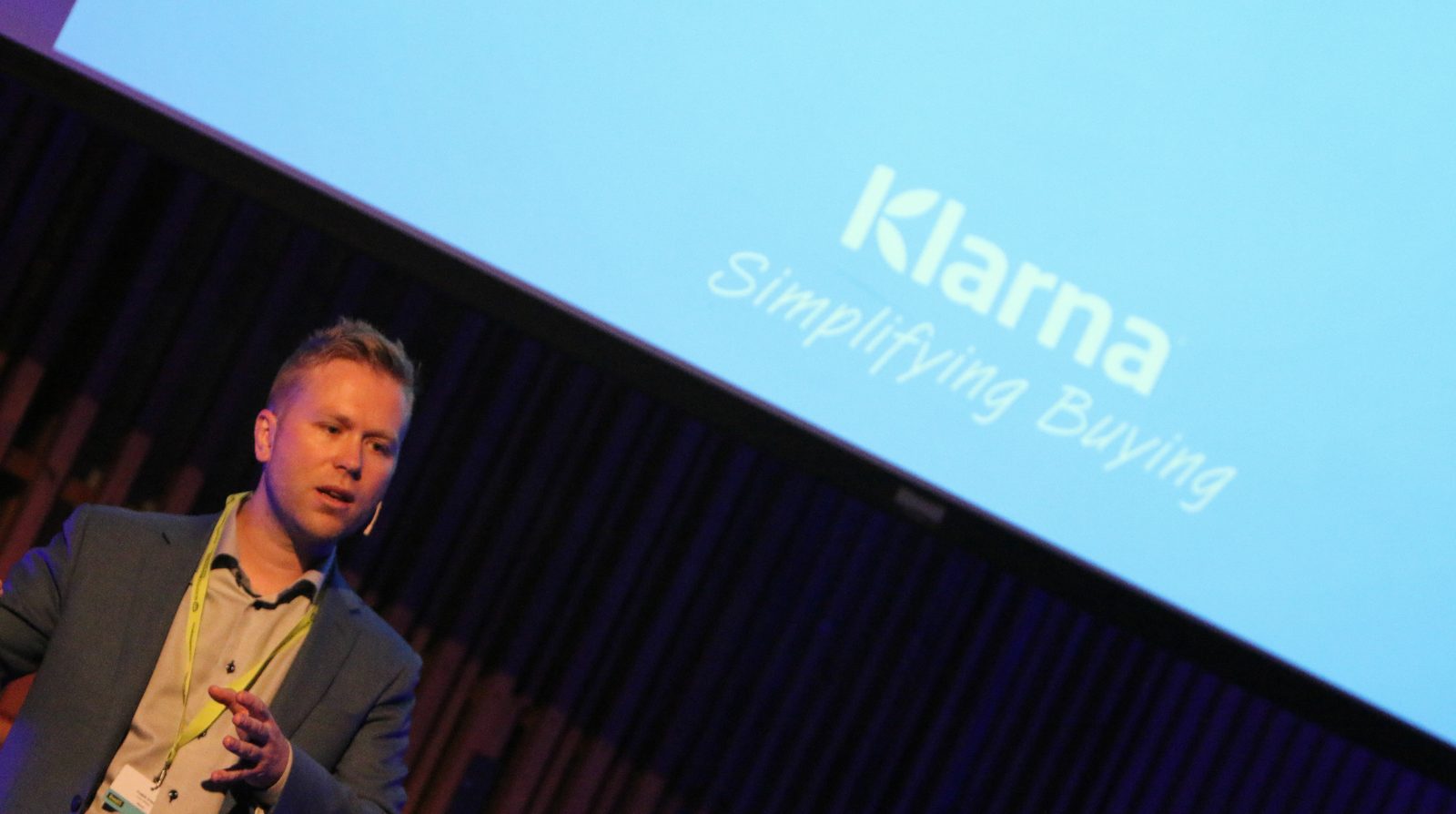
The Klarna brand on a presentation screen. Photo: Freddy Foss / Nordiske Mediedager, Wikimedia Commons, CC BY-SA 2.0.
Photo: Klarna headquarters entrance (2020), Felix4heller / Wikimedia Commons, CC BY-SA 4.0.
In February 2024, Klarna proudly announced its AI was doing the work of 700 customer service employees. Just over a year later, the company's own CEO told the press: we are hiring humans again.
From 2022-2024, Klarna cut around 700 customer service positions, replaced by an AI assistant built with OpenAI that handled 75% of chats and saved about $40 million per year. But service quality visibly dropped: customers complained about generic answers lacking empathy in complex cases. In mid-2025, CEO Sebastian Siemiatkowski admitted the company had leaned too far into cost cutting and began rehiring human staff under a flexible, freelance-style model. The lesson: AI Agents work best handling well-defined tasks with a smooth handoff to humans - not replacing humans entirely.

What did Klarna do?
- Built an AI assistant with OpenAI: launched in early 2024, promoted as capable of doing the work of 700 full-time customer service employees.
- Handled most chats: in its first month, the AI handled about 2.3 million conversations - roughly 75% of the company's total chat volume.
- Saved significant costs: the company estimated savings of about $40 million per year from headcount reduction.
- Massive press coverage: major outlets (Bloomberg, CNBC) covered the story as a model of successful AI transformation.
Source: CEO Sebastian Siemiatkowski's remarks to Bloomberg, via Forbes and Fortune (May 2025).
What happened in between?
The problem was not that the AI "didn't work" in a technical sense - it still answered most common questions. The problem was experience quality in complex cases. Customers dealing with payment disputes or sensitive complaints, or simply wanting to talk to a real person, got generic, repetitive answers that couldn't flex to personal context. Customer satisfaction eroded, even while the operational metrics (response time, volume handled) still looked great on reports.
How did Klarna correct course?
CEO Sebastian Siemiatkowski publicly admitted the company had over-prioritized cost cutting at the expense of customer experience. Klarna began rehiring customer service staff, but under a new model: flexible, freelance-style workers who choose their own hours and can work remotely - combining AI's efficiency on simple tasks with human flexibility and empathy on the hard cases.
The lesson for businesses deploying AI Agents: AI works best on repetitive, well-defined tasks, with a smooth handoff to humans whenever a case is complex or needs empathy. The right goal for an AI Agent is to optimize the customer experience first - cost savings are a byproduct, not the sole objective worth trading everything else for.
This is also the design principle behind Chạm AI Agency's AI Agents: always keep a handoff path to humans, and never leave customers "stuck" in a robotic answer loop. For the flip side of today's AI wave, see the Chegg vs. AI Overviews case study (in Vietnamese).

A dedicated visual selected for this article. A dedicated editorial visual selected for this article.
Frequently asked questions
How many employees did Klarna replace with AI?
From 2022-2024, Klarna cut around 700 customer service positions, replaced by an AI assistant built with OpenAI. In February 2024 the company announced the AI handled 75% of chats - the work of 700 staff - saving about $40 million per year.
Why did Klarna go back to hiring humans?
Service quality dropped: customers complained about generic, repetitive AI answers that could not handle complex, empathy-heavy cases. CEO Sebastian Siemiatkowski admitted the company had focused too hard on cost cutting, hurting the customer experience.
What is the lesson from Klarna for businesses adopting AI Agents?
AI Agents should handle repetitive, well-defined tasks and always keep a smooth handoff to humans for complex or empathy-heavy cases. Deploy AI to optimize the experience first - cost savings come as a byproduct, not the only goal.