Google Business Profile in the AI era: 8 tasks for local shops

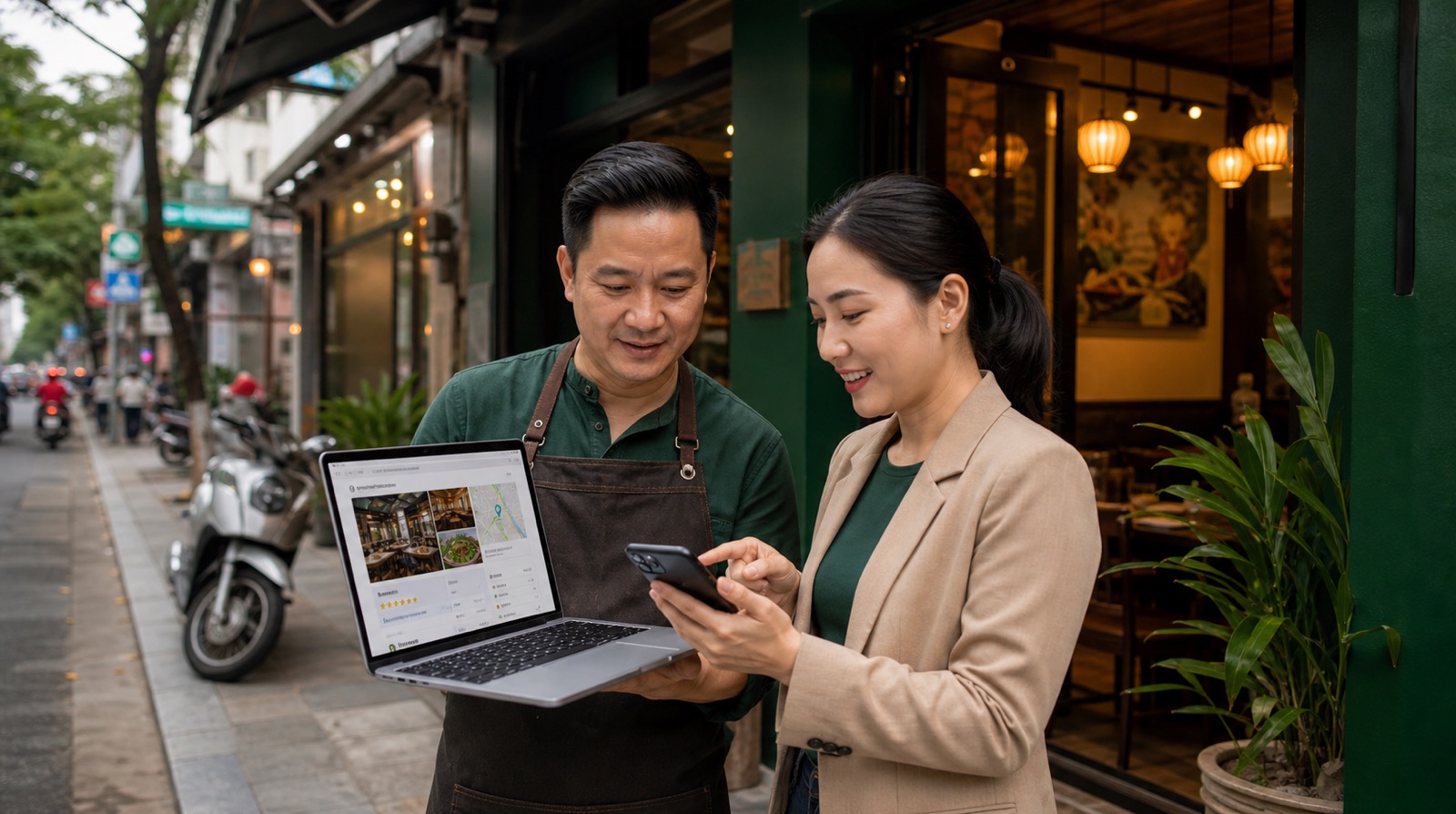
A trustworthy local profile begins with accurate data and photos that match the real storefront. Illustration generated with AI.
When a customer asks Gemini "which quiet cafe near me is good for working?", the AI does not invent an answer - it reads Google Maps data: categories, descriptions, reviews. That means your Google Business Profile (GBP) is no longer just "a pin on the map"; it is the file AI consults to decide whether to recommend you. And optimizing it costs exactly nothing.
8 Google Business Profile tasks for the AI era: (1) pick the most specific primary category plus 2-3 secondary ones; (2) write a 750-character description naming the traits customers actually search for (quiet, parking, kid-friendly); (3) add fresh photos monthly - storefront, interior, products; (4) ask for reviews and reply within 48 hours, negative ones included; (5) seed the Q&A section with your own common questions and answers; (6) keep opening hours accurate, holidays included; (7) post 1-2 times a week; (8) keep NAP consistent - name, address and phone written identically everywhere. All of it is free; the only cost is discipline.
Why GBP became a local business's most important "GEO file"
For any query with a location component - "near me", "in District 3", "in Ho Chi Minh City" - Google Search, Google Maps and AI assistants all lean on the same source: business data on Maps. As AI-generated answers replace lists of links, the "pre-picked answer" for a local search is two or three named places with reasons attached. To make that shortlist, your profile has to give the machine enough facts to describe you in words: not just "a cafe" but "a quiet cafe with a private room, open till 11pm, with car parking". This is the local half of the GEO picture that many small businesses skip because they are busy with their website.
A business profile on a map with reviews. Illustration. Illustration generated with AI.
The 8 tasks, ranked by impact
1. Categories. Your primary category decides which queries you can appear for - choose the most specific one ("coffee shop", not "store") and add 2-3 truthful secondary categories. 2. The 750-character description. Write it as an answer to a customer's question: who you serve and what makes people choose you - the exact phrases customers will ask AI. 3. Photos. Profiles with plenty of fresh photos get viewed and trusted far more; the minimum set is the storefront (so customers can find you), the interior, and 5-10 core products. 4. Reviews - the heavyweight. Score, volume and the text of reviews are all machine-read: a review that says "quiet" or "lovely staff" is literally the data AI uses to attach that trait to your shop. A simple routine works: a QR code at the counter inviting reviews, plus a reply to every review within 48 hours. 5. Q&A. The section everyone leaves empty: post 5-7 questions customers actually ask (is there parking, do you take reservations) and answer them yourself - the same spirit as writing FAQs that AI will cite, but right on Maps. 6. Opening hours. Wrong holiday hours are the fastest way to lose a customer and collect a 1-star review. 7. Posts. One or two a week - new items, offers - keep the profile visibly alive. 8. NAP consistency. Name, address and phone must be written identically on GBP, your website, Facebook and every directory; even a one-character mismatch erodes machine trust.
Connecting GBP to the rest of your ecosystem
GBP is strongest when it does not stand alone. Your website should tell the same story: the homepage needs LocalBusiness/Organization schema whose NAP matches the Maps profile - check it in seconds with our free SEO + GEO Audit tool. Turn reviews into content: quote your best reviews (with permission) on the website and in posts - machines read the consistency between what you claim and what customers say. Close the loop at the counter: that review-inviting QR code is one of the 7 phygital touchpoints of a coffee shop - a happy in-store customer becomes digital data that feeds the next customer's search. Finally, track the payoff inside GBP itself: profile views, direction requests and calls - three free numbers most owners have never opened.
Checklist distilled from Google Business Profile's official guidance and Chạm AI's local SEO/GEO work with F&B and service clients in Ho Chi Minh City, 2024-2026. GBP features may change as Google updates the product.

A dedicated visual selected for this article. CC0 editorial photograph.
Frequently asked questions
Does Google Business Profile affect whether AI recommends my business?
Yes, and increasingly so. When a user asks Gemini or AI Mode for "a quiet cafe to work from nearby", the answer leans heavily on Google Maps data: categories, description, opening hours, review score and the text of the reviews themselves. A complete profile with good reviews and a description that names concrete traits (quiet, meeting room, kid-friendly) helps AI understand and recommend the right place.
What is NAP consistency and why does it matter?
NAP stands for Name, Address, Phone. Consistency means those three fields are written identically on your Google Business Profile, website, Facebook page and every directory listing. Mismatches - "St." in one place, "Street" in another, two different hotlines - make both Google and AI systems less confident it is the same business, which lowers trust.
How often should I post and reply to reviews?
Reply to reviews within 48 hours, including negative ones - a professional public reply is worth more than a silent 5-star rating. Posts (offers, events, new items) at 1-2 per week are enough to keep the profile looking alive. Add fresh photos monthly.