Phygital for coffee shops: 7 touchpoints that bring guests back


A coffee shop is the most natural phygital business there is: guests come for the physical space, yet they find you on Google Maps, order through a QR code and remember you through a chat app. The problem is that most cafes build these pieces separately. This article lines up all 7 touchpoints as one journey - ordered by cost.
7 phygital touchpoints for a coffee shop, ordered along the guest journey: (1) Google Maps - where new guests decide to visit, free; (2) QR menu ordering at the table; (3) wifi with a welcome portal capturing a chat-app contact; (4) a deliberately designed check-in corner with your hashtag; (5) loyalty in a chat app (Zalo in Vietnam) - points without installing an app; (6) ambient screens telling the shop's story; (7) an AI agent answering the page and taking bookings 24/7. The first three cost almost nothing. The golden order: be found → be smooth → be remembered.
Why think in touchpoints at all?
A regular is worth many times a walk-in - but "regular" does not happen by itself. Between two visits are 2-4 weeks in which the guest never sees you; if no digital touchpoint fills that gap (a new-menu note in their chat app, a post they get tagged in), the shop is forgotten. Conversely, the digital layer cannot replace the reason people come: good coffee and a pleasant room. Phygital for F&B is precisely the joint between the two: the physical keeps guests in the seat, the digital brings them back.
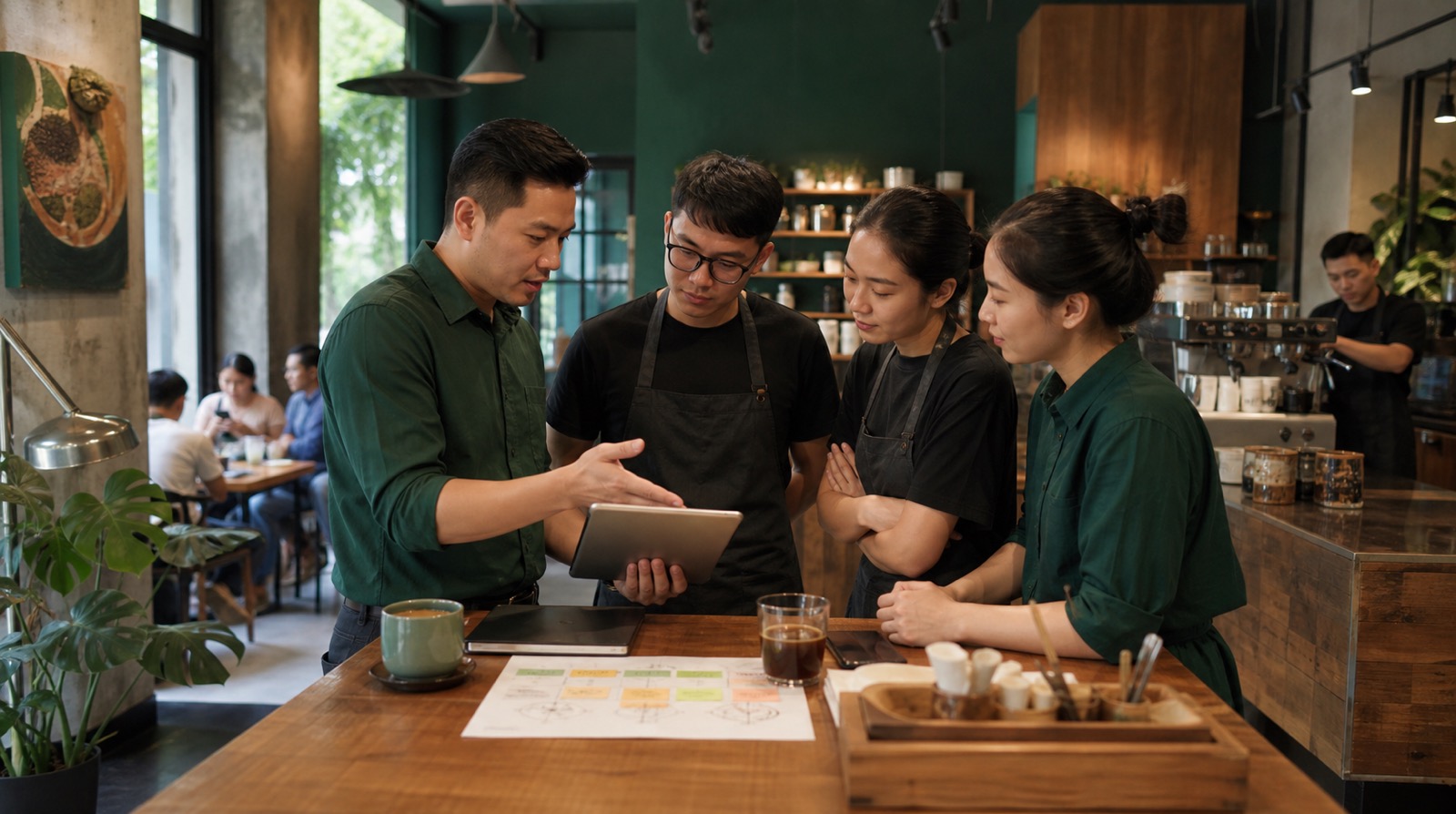
Phygital works when technology helps the team serve customers better in the café. Illustration generated with AI.
The three near-zero-cost touchpoints - do these first
1. Google Maps + reviews. For a cafe, Maps is the real homepage: the cover photo, opening hours and - above all - recent reviews decide whether a stranger turns in. Keep it simple: a small QR at the counter inviting happy guests to review, and answer every review - including bad ones - within 48 hours. This is also the data AI assistants read when asked "a quiet cafe near me"; our guide to optimizing Google Business Profile in the AI era (Vietnamese) covers the full checklist.
2. QR menu ordering. Guests order the moment they sit down - no hand-waving for staff; the shop saves one trip per order and sells suggested add-ons. A QR opening a simple web menu is enough to start - no expensive POS required.
3. Chat-app loyalty. Nobody installs an app for a single cafe, but everyone has a messaging app - in Vietnam that is Zalo. Points by phone number, a free cup to redeem, and most importantly: the shop now owns a channel to reach guests again. One well-timed Friday-afternoon message about a new drink beats ten fanpage posts nobody sees.
A dedicated visual selected for this article. A dedicated editorial visual selected for this article.
The four upgrades - once traffic is steady
4. A deliberate check-in corner. Not every flower wall spreads. A good photo spot needs three things: flattering light at your busiest hours, a detail that is unmistakably yours (do not copy Pinterest), and your name or hashtag appearing naturally in the frame. 5. Wifi welcome portal: trade free wifi for one chat-app connection - the cheapest on-site data capture there is, as long as it is one tap, not a long form. 6. Ambient screens: instead of running ads, tell stories - bean origins, this week's guest photos, an experiment on the menu. 7. An AI agent on the page: when "are you open / any free tables / do you deliver" passes 20-30 messages a day, an agent that answers and logs bookings gives the owner their evenings back - see the full list of 9 jobs an AI Agent can do.
The golden order: found → smooth → remembered
The common mistake is doing it backwards: investing in LED screens and a custom app while the Maps listing still shows photos from two years ago. Follow your guest's own journey: first be found (Maps, reviews), then be smooth in the shop (QR, fast payment), finally be remembered (chat app, agent care). Each layer has one measurable number: direction requests on Maps, minutes from seat to drink, and the share of guests returning within 30 days. When all three move, the shop no longer depends on whether "today goes viral".
The 7-touchpoint framework is distilled from Chạm AI's phygital projects for F&B and retail in 2024-2026; "near-zero cost" assumes free tiers of Google Business Profile, a basic Zalo OA and a static web menu, excluding content design time.
Frequently asked questions
What does phygital mean for a coffee shop?
It means connecting the in-store experience (space, coffee, staff) with a digital layer (QR, messaging apps, Google Maps, an AI agent) into one seamless journey: guests sit in the shop but order via QR, collect loyalty points in a chat app, leave a Google review and get a well-timed nudge to return. The goal is turning walk-ins into regulars without building an app.
Which touchpoint should a cafe start with?
In order of lowest cost and fastest impact: Google Maps first (free, and it decides whether new guests find you), then QR menu ordering (less waiting, more add-on items), then chat-app loyalty (no app install needed). These three cost almost nothing. Ambient screens, a check-in corner and an AI agent come after you have steady foot traffic.
Does a small 20-30 seat cafe need an AI agent?
Yes - once your page and chat channels receive more than 20-30 messages a day (opening hours, free tables, bookings, delivery). An agent answers the repetitive questions and logs table bookings automatically so the owner is not glued to the phone; below that threshold, saved replies plus a human are enough.