Brand voice for AI agents: keeping your brand's voice when a machine talks to your customers

Businesses spend years building a brand voice across packaging, ads and social - then bolt a soulless "Dear valued customer" AI agent onto the website. From that moment, the "person" who talks to customers most every day is the only one who was never taught the brand. This guide shows how to fix that properly.
A brand voice for an AI agent is the rulebook that makes AI sound like your brand: forms of address, vocabulary, sentence rhythm, attitude, and forbidden topics. It matters because the AI agent works 24/7 and is often your highest-volume conversational touchpoint, while most customers expect brands to be consistent across channels. The process has 4 steps: define the voice along 3 axes (vocabulary - rhythm - attitude), document it as a voice guide, train the AI with a system prompt plus example conversations, and set guardrails for risky topics. For Vietnamese, the single biggest decision is the form of address.
What is brand voice when AI speaks for the brand?
Brand voice is the consistent personality a brand expresses through language: how it addresses people, which words it chooses, how long its sentences run, how playful or formal it is. That voice used to be carried by humans - copywriters, support staff. When a business deploys an AI agent for sales and support, the AI becomes the busiest spokesperson: on duty 24/7, replying before any employee, present on the website and messaging apps simultaneously. Brand voice for an AI agent therefore means translating brand personality into rules a machine can execute: a system prompt, example conversations, and a list of things it must never say.
Industry data says this is not cosmetic: customer experience surveys have for years found that roughly three quarters of customers expect consistent brand communication across channels, and brand consistency research (Marq/Lucidpress, indicative) estimates consistent presentation can contribute an additional 20-30% of revenue. On the flip side, the Duolingo "AI-first" crisis of 2025 shows what happens when a message breaks from the voice a brand has built: the community felt betrayed after a single email.

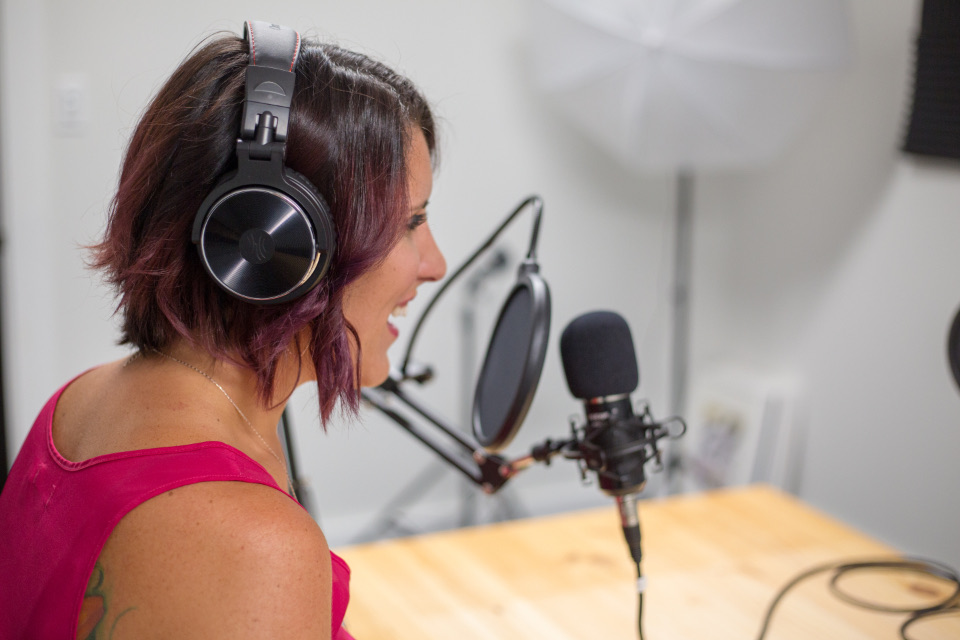
Drafting a brand voice for an AI agent. Stock photo (CC0).
Why do AI agents get the voice wrong so often?
Because by default, every language model speaks in its own neutral register. Without instruction, AI picks the safest option: formal, wordy, template-polite. The three most common failures we see in audits: first, the prompt only says "be friendly" - far too vague to produce a distinct voice; second, no example conversations, so the AI sounds different every session; third, no boundaries, so the AI happily comments on topics the brand would never touch (competitors, politics, price promises). The result is an "employee" who sounds like nobody in the company and occasionally promises things the company never intended to promise.
Four steps from brand personality to an on-brand AI agent - skip any one and it leaves a "voice gap".
How to build a brand voice for an AI agent in 4 steps
Step 1 - Define the voice along 3 axes. Vocabulary: the words your brand always uses and the ones it never uses. Rhythm: short or detailed sentences, emoji or not, how conversations open and close. Attitude: confident or humble, how playful, how it reacts when a customer is upset. Quick hack: pull the 20 best messages your best support person ever sent - that is the voice you want to clone.
Step 2 - Document it as a voice guide. Pack the 3 axes into 1-2 pages, anchored by a do-say/don't-say table with 8-10 pairs of real examples. One document for humans and machines alike - new hires read it, and so does the AI.
Step 3 - Train the AI. Put the voice guide into the system prompt, plus 5-10 complete example conversations (few-shot) drawn from real situations: pricing questions, comparisons, complaints, out-of-scope requests. Examples shape the voice more than descriptions do - AI imitates better than it infers.
Step 4 - Guardrails and testing. List the topics the AI must refuse or hand to a human: criticizing competitors, price or deadline commitments beyond policy, medical or legal advice, politics. Before launch, test with 20-30 hard scenarios (angry customers, users baiting the AI to trash rivals, slang). After launch, review conversation logs weekly and patch wherever the tone drifts.
For Vietnamese: the form of address is decision number one
Vietnamese brand voice has a layer English templates don't cover: the address system. "Em chào anh", "Mình chào bạn", "Dạ, shop chào chị" and "Kính chào quý khách" are four different brands to a Vietnamese ear. The form of address must be chosen for your customer segment and locked for every conversation - an AI switching pronouns mid-chat is the fastest way to expose the machine. You also need rules for writing prices, handling regional slang, and training on real Vietnamese example conversations rather than translated English prompts. This is why Vietnamese AI agents need dedicated training rather than default configurations.
- Choose and lock the form of address for your customer segment.
- List 10 "our words" and 10 forbidden words.
- Write a table of 8-10 do-say / don't-say pairs from real messages.
- Load the system prompt plus 5-10 complete example conversations.
- Declare forbidden topics and human-handoff points.
- Test 20-30 hard scenarios before launch; review logs weekly at first.
Where should a business start?
If your brand already has a verbal identity (tagline, a recognizable social media style), start at step 2: consolidate what exists into a voice guide, then train the AI on it. If you have never defined a voice, run step 1 as a short internal workshop before touching the technology - a brand in the AI era is "heard" through every automated touchpoint, and fixing the voice after customers have gotten used to it costs more than doing it right the first time. At Chạm AI, every AI agent we deploy ships with a voice guide and an industry-specific set of Vietnamese example conversations - try the live demo agent on the page and hear how different it sounds from a default machine.
References: Salesforce, State of the Connected Customer (recent editions) · Marq/Lucidpress, "State of Brand Consistency" (indicative figures) · Fortune, Customer Experience Dive on the Duolingo case (2025-2026).

Color swatches and brand identity items on a work desk. Stock photo (CC0).
Frequently asked questions
What is a brand voice for an AI agent?
It is the set of rules governing how an AI agent speaks on behalf of your brand: forms of address, signature vocabulary, sentence rhythm, attitude, and the things it must never say. These rules go into the system prompt and training examples so every AI reply sounds like the brand, not like generic software.
Why does an AI agent need a custom brand voice instead of the default?
Because the AI agent is usually your most active conversational touchpoint: online 24/7, replying before any human. Industry surveys consistently find that most customers expect brands to communicate consistently across channels and expect chatbots to sound like the brand rather than generic software. An off-tone voice fragments the experience and erodes trust.
How do you test whether an AI agent's voice is on-brand?
Run 20-30 hard scenarios before launch: angry customers, requests to badmouth competitors, slang, questions outside scope. Compare replies against your voice guide's do-say/don't-say table, then review conversation logs weekly in the first month and patch the system prompt where the tone drifts.