Domino's: the tech company that happens to sell pizza

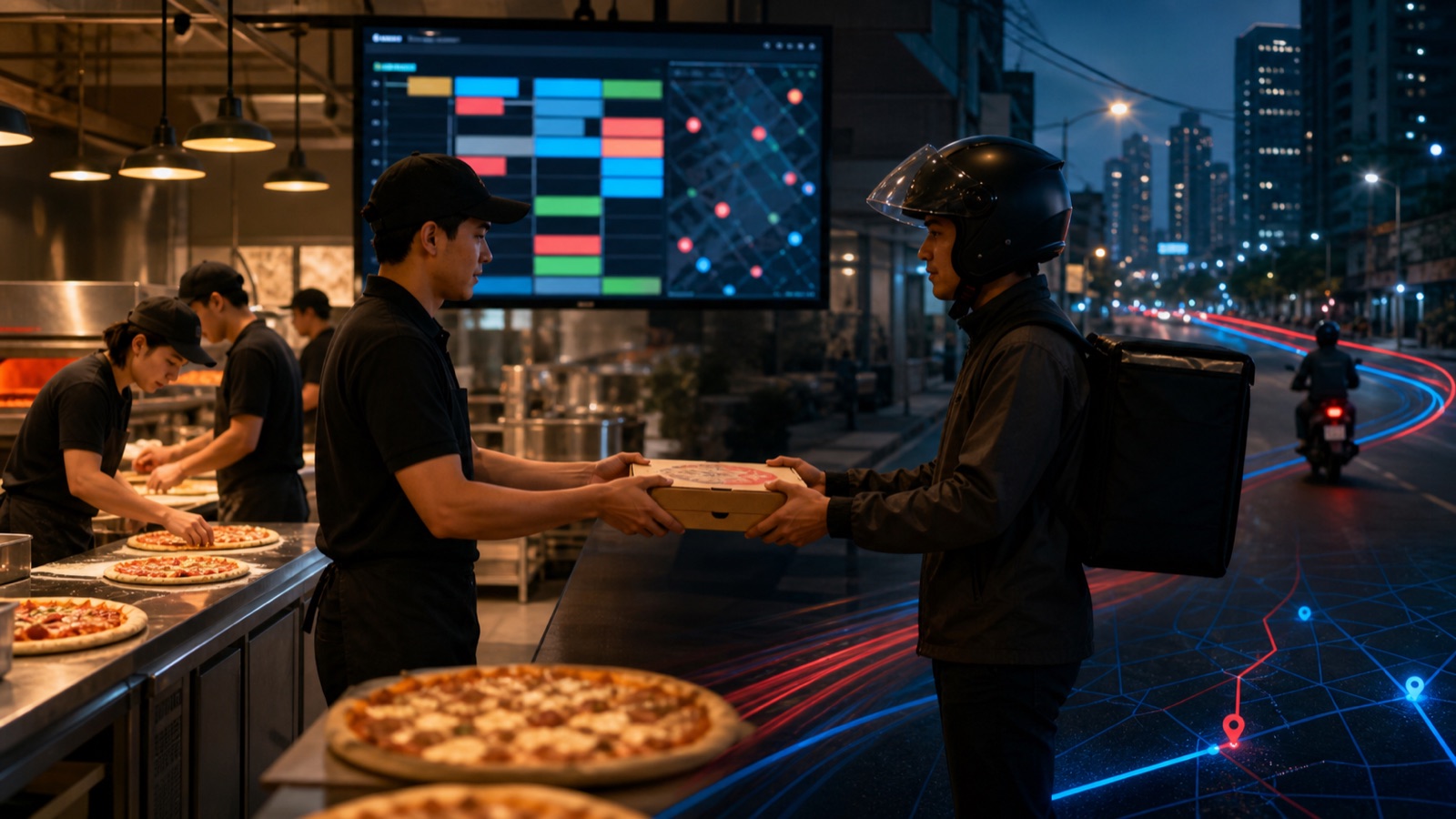
A pizza kitchen connecting digital ordering with delivery operations. Editorial illustration generated with AI.
In 2009, Domino's scored the lowest customer ratings in its history. Instead of hiding, it publicly admitted the problem and rebuilt from zero - not just the pizza, but the way pizza is sold. Fifteen years later, the stock was up more than 5,000%.
Domino's transformed from a pizza company into a technology company that sells pizza: heavy investment in the ordering app, the real-time Pizza Tracker, personalization data and optimized delivery. More than 70% of orders now arrive through digital channels across 15+ ordering paths. Result: growth outpacing almost every F&B chain and a stock up over 5,000%. The lesson: technology and transparency are competitive advantages, not costs.
What did the rebuild actually involve?
Order everywhere: app, web, chatbot, text, smartwatch, car, smart TV - more than 15 ways to order, driving over 70% of orders through digital channels and turning Domino's into "an e-commerce company that happens to sell pizza". Pizza Tracker: customers follow the order in real time from kneading to baking to quality check to hand-off - transparency that builds trust and turns the wait into an experience. Data and personalization: saved favorites, re-order suggestions, individual offers - the system remembers your last order and proposes it at the right moment. Optimized delivery: GPS tracking, AI routing, and experiments with Nuro robots and drones.
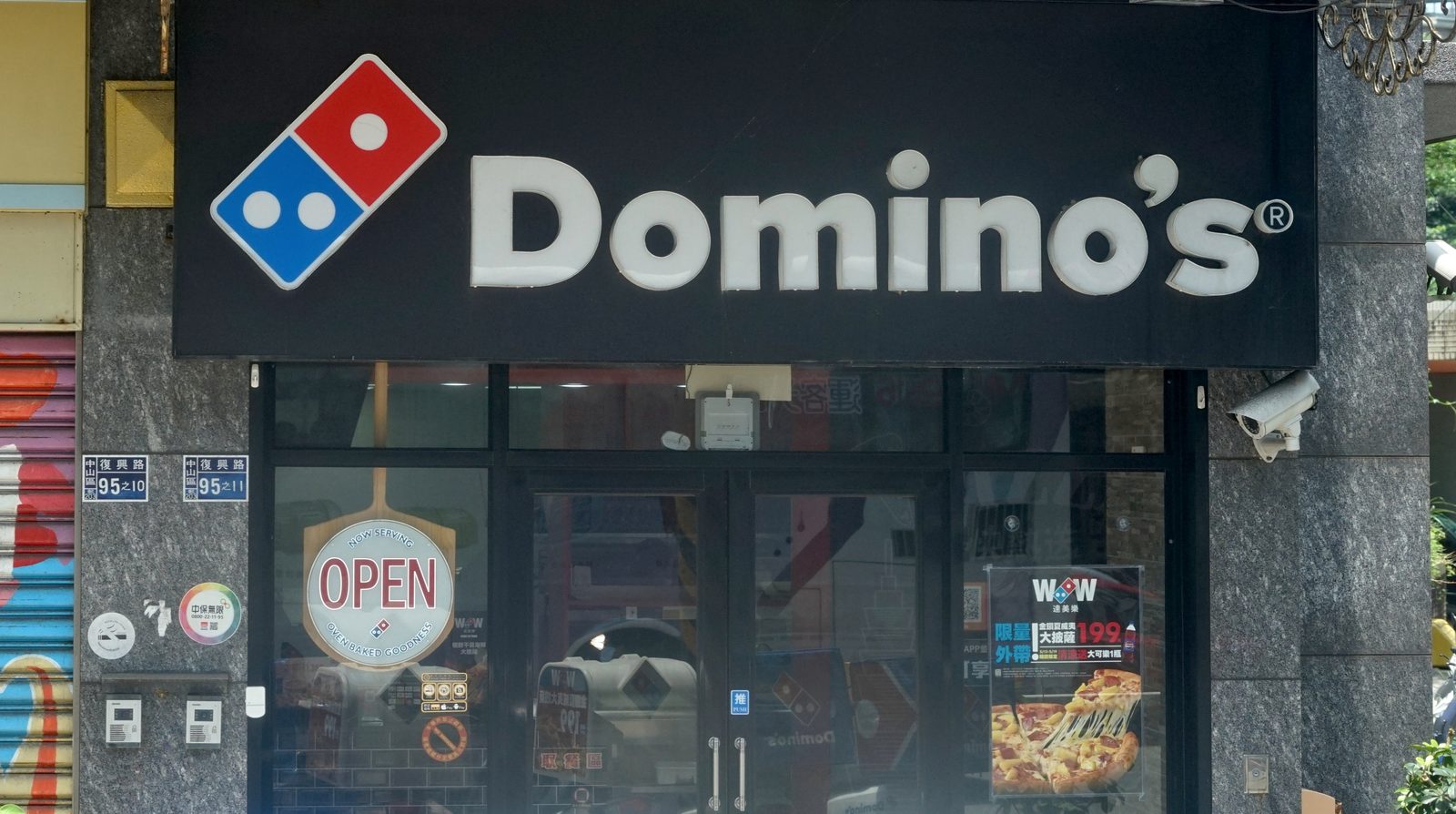
A Domino's Pizza store with its familiar sign. Photo: Solomon203, Wikimedia Commons, CC BY-SA 4.0.
Why did the honesty matter as much as the tech?
The 2009 confession - "our pizza was bad" - was the foundation the technology stood on. Admitting the flaw publicly, then showing the fix, converted skeptics into an audience rooting for the comeback. The numbers followed: growth outpacing almost every F&B chain and a stock up more than 5,000% in 15 years. Technology and transparency became the competitive advantage - not a cost line. It is the mirror image of Klarna's AI U-turn: technology wins when it improves the experience, not when it merely cuts cost.
What can your business borrow?
Transparency scales down perfectly: a real-time order status - even a simple sequence of Zalo messages driven by an AI agent - turns waiting into an experience for any shop. Channels follow customers: you do not need 15 ordering paths, but you need the two or three where your customers already are, connected to one system - the argument of our online-shop service page. And fix the product first: Domino's proves the sequence - substance, then story, then scale. Technology amplifies whatever the product truly is; make sure what it amplifies is good.
Case study compiled from Domino's public turnaround reporting (2009 onward) and investor communications. Figures are as widely reported; stock performance varies by measurement window.
A dedicated visual selected for this article. A dedicated editorial visual selected for this article.
Frequently asked questions
What did Domino's do after the 2009 crisis?
In 2009 Domino's ranked last in US pizza-taste surveys, with customers publicly calling the pizza 'like cardboard'. CEO Patrick Doyle did something unheard of in F&B: he went on TV and admitted the pizza was bad. Then came the radical rebuild - fixing the recipe AND building a technology infrastructure from scratch, turning Domino's from a budget pizza chain into one of the world's most successful digital-transformation case studies.
How is Domino's a technology company?
It offers more than 15 ways to order - app, web, chatbot, text message, smartwatch, car, smart TV - and more than 70% of orders come through digital channels. The Pizza Tracker shows each order in real time from dough to delivery; data personalizes suggestions and offers; GPS tracking and AI routing optimize delivery, with robot (Nuro) and drone experiments. The result: 15 years after the crisis, the stock had risen more than 5,000%.
What is the lesson for smaller businesses?
Two things scale down perfectly. Transparency builds trust: admitting a weakness and showing the fix publicly converts critics into supporters - and a real-time order status (even a simple Zalo message sequence) turns waiting into an experience. And meet customers in every channel they already use: you do not need 15 ordering channels, but you do need the two or three where your customers actually are, connected to one system.