Game culture, phygital and live selling: why all three run on the same set of mechanics


Photo: PattayaPatrol, Flickr, CC BY-SA 4.0 licence.
Someone who has played games for a few years does not need anyone to explain what a progress bar is, why daily quests matter, or why an event that lasts only 72 hours is worth joining. Those reflexes are already installed. What is striking is that the same set of reflexes is now being reused inside stores and inside live selling shows, almost unchanged.
Quick summary: The retention mechanics of games are quests and progress, tiers, random rewards, time limited events and leaderboards. Phygital retail and live selling reuse exactly that set under different names: stamp cards, membership tiers, prize wheels, flash sales, customer honour boards. The reason is that all three environments solve the same problem, which is keeping people present for longer and giving them a reason to return. Live selling is the clearest meeting point because it has a simultaneous audience, real time comments and milestone rewards. The biggest risk sits in the random mechanics, where the slide into gambling psychology is easy if the odds are not transparent.
Why do games, phygital retail and live selling look so alike?
These three environments differ in form but share a problem. A game has to keep a player past the first hour and pull them back into the app the next day. A store has to keep a visitor walking the full display route instead of turning back after 2 minutes, and needs a reason for them to return. A live selling show has to hold viewers long enough to hear the product out, then bring them back for the next session. When the problem is the same, the solutions converge. The shared toolkit has three parts: a visible short term goal, immediate feedback after every action, and an unfinished progress chain that makes people regret abandoning it.
What changed compared with 10 years ago is not the mechanics themselves but the fact that users are now fluent in them. When a person who plays games sees a progress bar in a store app, they do not need to read instructions.
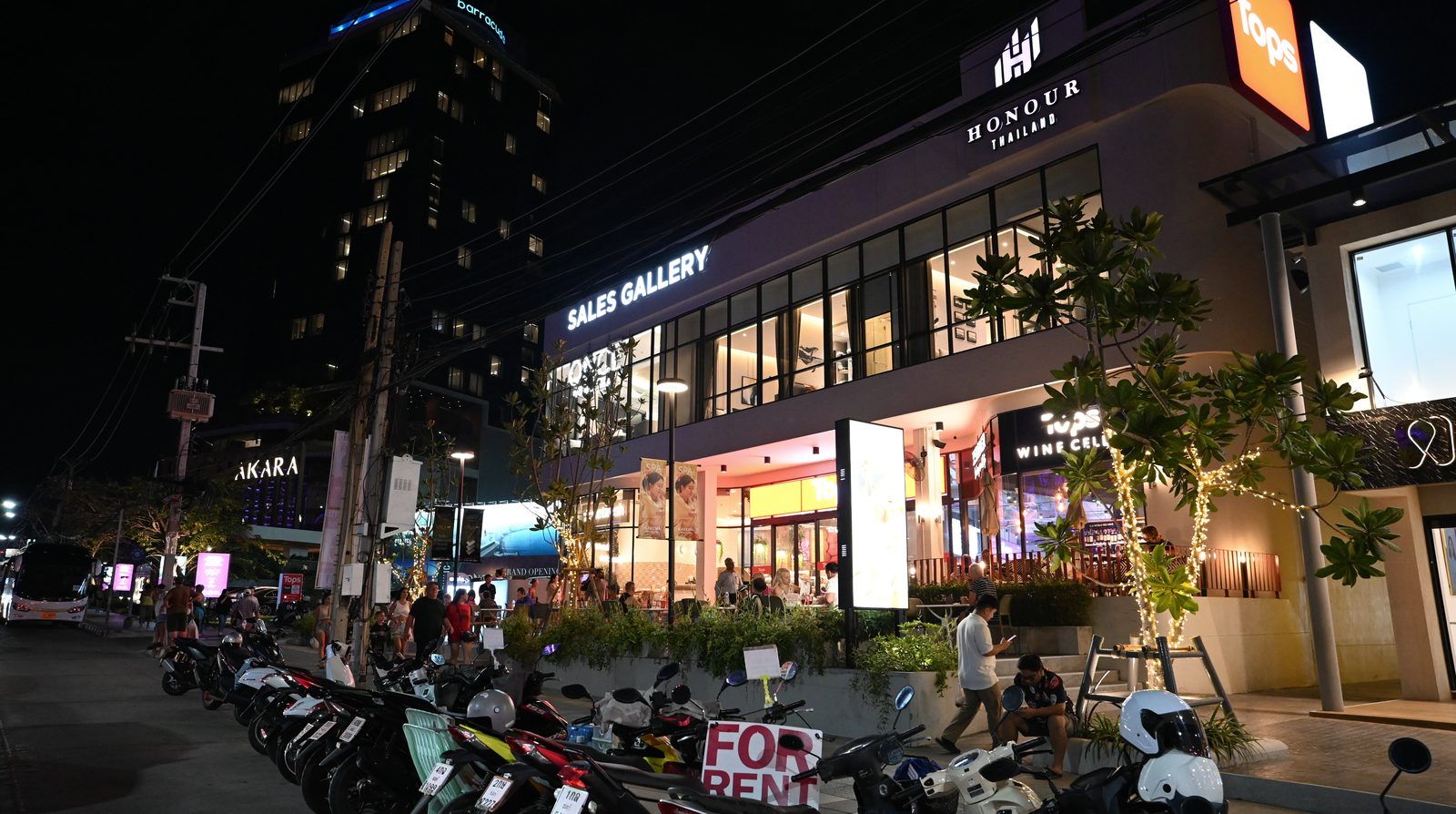
A neon-lit shopping street where entertainment meets commerce. Photo: PattayaPatrol, Wikimedia Commons, CC BY-SA 4.0.
What do quests and progress turn into inside retail?
In a game, a quest is a small task with clear criteria and a progress bar attached. Its power comes from the unfinished state rather than from the reward: a bar sitting at 4 out of 6 creates far more pressure to complete than an empty one. Retail reuses that exact structure through stamp cards, buy a set number of times and get a gift programmes, or a reminder that one more spending step unlocks a higher tier.
In live selling, the same mechanic shows up as session milestones: reach a viewer count and a gift unlocks, reach an order count and an extra code unlocks. Viewers watch the number climbing and shift from audience to participant on their own. This is why milestones belong in the framework script for a live selling show from the start, instead of being improvised on air.
Comparison table built by the Chạm AI content team for planning mechanics. It is an analytical frame, not market data. The orange border marks the group of mechanics that needs the tightest ethical control.
What do levels and membership tiers actually say?
In a game, levels do two jobs: they acknowledge the time already spent, and they unlock things only players at that level can have. The second job matters more, because a level that opens nothing new is just a number. Loyalty tiers in retail fall into exactly that trap: many programmes split customers into 3 or 4 tiers, yet the gap between tiers is a few percent of discount, so nobody pays attention to which tier they are in.
A tier carries weight when it converts into something money cannot buy instantly: early access, an invitation to a product trial, being recognised by name by the staff. In live selling, the simplest version is the host greeting a regular by name on air. It costs nothing and creates exactly the sense of being acknowledged that levels deliver in a game.
Random rewards: the strongest mechanic and the most dangerous
Loot boxes and gacha are the strongest retention mechanic the games industry has ever produced, because an unpredictable reward sustains repeated behaviour better than a fixed one. The retail version is the prize wheel, the mystery box, the mid show lucky draw. The pull is real, and precisely because it is real the boundaries have to be set before launch rather than after a backlash.
Three boundaries are worth holding. First, the buyer must receive certain value beyond the random part: they pay for an item with clear worth, and the random element is only an addition. Second, the odds must be published as numbers, with conditions and an end date, and they must match what is actually awarded. Third, do not point random mechanics at children or at people in a vulnerable state. Once a mechanic starts pushing buyers to spend more than they intended in pursuit of a prize they have not won yet, it has left the promotion zone and entered gambling style psychology. If most of a programme's revenue comes from a small group of buyers repeating the same action many times, the mechanic is extracting rather than serving.
How do time limited events and leaderboards work?
Limited events work in games because three elements travel together: a real end date, a reward that exists only inside that window, and a visible countdown. Flash sales and time boxed live shows are direct copies, with the same survival condition: the deadline has to be real. A programme that is always extended loses its force from the second time onwards.
Leaderboards and groups are the second family. In games, a guild holds players longer than any individual reward, because leaving means leaving other people behind. Retail has a lighter version: honour boards for top buyers, brand community groups, lists of people who completed a collection. Note that public leaderboards only suit small groups who opted in, since most buyers do not want their spending turned into something to be compared.
The feeling of mastery in store, and why live selling is the meeting point
Games keep players in a state that is just difficult enough: too easy and they get bored, too hard and they quit. Retail space has its own version of that state. A store laid out so that visitors discover something themselves, find their own good photo angle, or complete a stamp collection across several visits, is creating a sense of mastery rather than just displaying stock. Digital touchpoints should follow the same spirit, covered in detail in our piece on QR codes and digital touchpoints in store, while the conceptual foundation sits in what phygital is and why hybrid experience is replacing traditional retail.
Live selling is where the three layers meet most clearly: there is a simultaneous audience, so one person's action affects the group; there are real time comments, so every action gets feedback within seconds; and there are milestone rewards, so a shared unfinished goal always exists. Those three traits together produce something very close to a play session with spectators.
How do you keep the mechanics from feeling cheap?
The line between a good mechanic and a cheap trick sits in whether it is attached to real value. A healthy mechanic makes existing value easier to see and easier to pursue, while a manipulative one uses the sensation of progress and scarcity to hide the fact that the product is not worth that much. Four questions to test yourself: does the buyer receive what they actually need even if they never join the mechanic; are the conditions and odds published clearly enough; would the brand be uncomfortable if the entire operating logic were made public; and does the mechanic push anyone to spend beyond their means. A single wrong answer is reason enough to redesign.
- Pick exactly 1 mechanic to start with, preferably quests and progress because it is the most transparent.
- Write down the real value the buyer receives even if they never join the mechanic.
- Keep progress chains short: 4 to 6 steps is right, longer and people abandon halfway.
- Publish conditions, odds and deadlines as concrete numbers, placed where they are easy to read.
- Only use random rewards when certain value comes with them, and never aim them at children.
- Align mechanics between the store and the live channel: same tiers, same points calculation.
- Honour the published deadline and do not extend it to rescue sales figures.
- After 3 months, measure the return rate rather than only session revenue, then decide whether to expand.
Where to start if the brand has nothing yet
You do not need a full system. A stamp card of 6 visits for 1 reward, showing clearly which step the buyer is on, plus one gift milestone in every live show, is already enough to test how your customer base reacts. Run that steadily for a few months before adding membership tiers and community. If your business wants mechanics designed to connect the store space and the live channel, take a look at the phygital and content service packages from Chạm AI, or read the professional profile of Lâm, Content Strategist and Livestream Producer.

A dedicated visual selected for this article. Editorial illustration generated with AI.
FAQ - Frequently asked questions
Why do game mechanics work in retail and live selling?
Because all three environments solve the same problem: keeping people present for longer and giving them a reason to come back. Game mechanics supply a visible short term goal, immediate feedback after every action and an unfinished progress chain. People who play games already know this language, so when they meet it again in a store or during a live show they understand it without instructions.
Are prize wheels and mystery boxes a form of gambling?
Not automatically, but the slide is easy. The line sits at three points: whether the buyer receives certain value beyond the random part, whether the odds are published clearly, and whether the mechanic targets children or vulnerable people. If the random reward is the only thing the buyer is paying for, that is the signal to stop and redesign.
Which mechanic should a small brand start with?
Start with quests and progress, because it is the most transparent mechanic and carries the least ethical risk. A stamp card of 6 visits for 1 reward, showing clearly which step the buyer is on, is already enough to create a reason to return. Only after that runs steadily for a few months should you consider membership tiers, leaderboards or random rewards.