QR codes in your store: 7 digital touchpoints that turn walk-ins into regulars

A customer walks in, finishes a coffee, pays and leaves - and the store keeps nothing but one transaction. Meanwhile the phone in their pocket is the door through which they come back. The piece that connects the two is surprisingly cheap: QR codes placed in the right spot, for the right purpose.
Vietnamese consumers already scan at scale: in the first 10 months of 2025, VietQR transactions grew 52% in volume and 85% in value, with NAPAS processing about 15 million VietQR transactions a day. Physical stores should ride that habit with 7 digital touchpoints: payment QR, menu/catalogue QR, Google review QR, Zalo OA / AI Agent QR, wifi-for-data QR, loyalty QR and product-story QR. Rollout principles: one code, one purpose; give customers a reason to scan; and measure every scan.
What is a digital touchpoint in a store?
A digital touchpoint in a store is any spot in the physical space where a customer can "touch" the brand's digital channels with their phone: a QR code on the table, at the checkout counter, on packaging, on a standee or a receipt. It is the smallest building block of the phygital model - physical space, digital channels and AI combined: the store creates the emotion, digital touchpoints keep the connection after the customer walks out, and the scan data makes the next visit better. Unlike a custom app (hundreds of millions of dong, and customers hate installing), a QR code is nearly free and asks nothing beyond a gesture people already know: raising the camera.
That habit in Vietnam is well past the "getting used to it" stage. Per NAPAS figures published in late 2025, VietQR money transfers in the first 10 months of the year grew 52% in volume (3.6 billion transactions) and 85% in value year on year; the system processes about 15 million VietQR transactions a day, with nearly 90 million accounts scanning via mobile banking. In other words: your customers already hold the key - the question is whether the store offers enough locks worth opening.
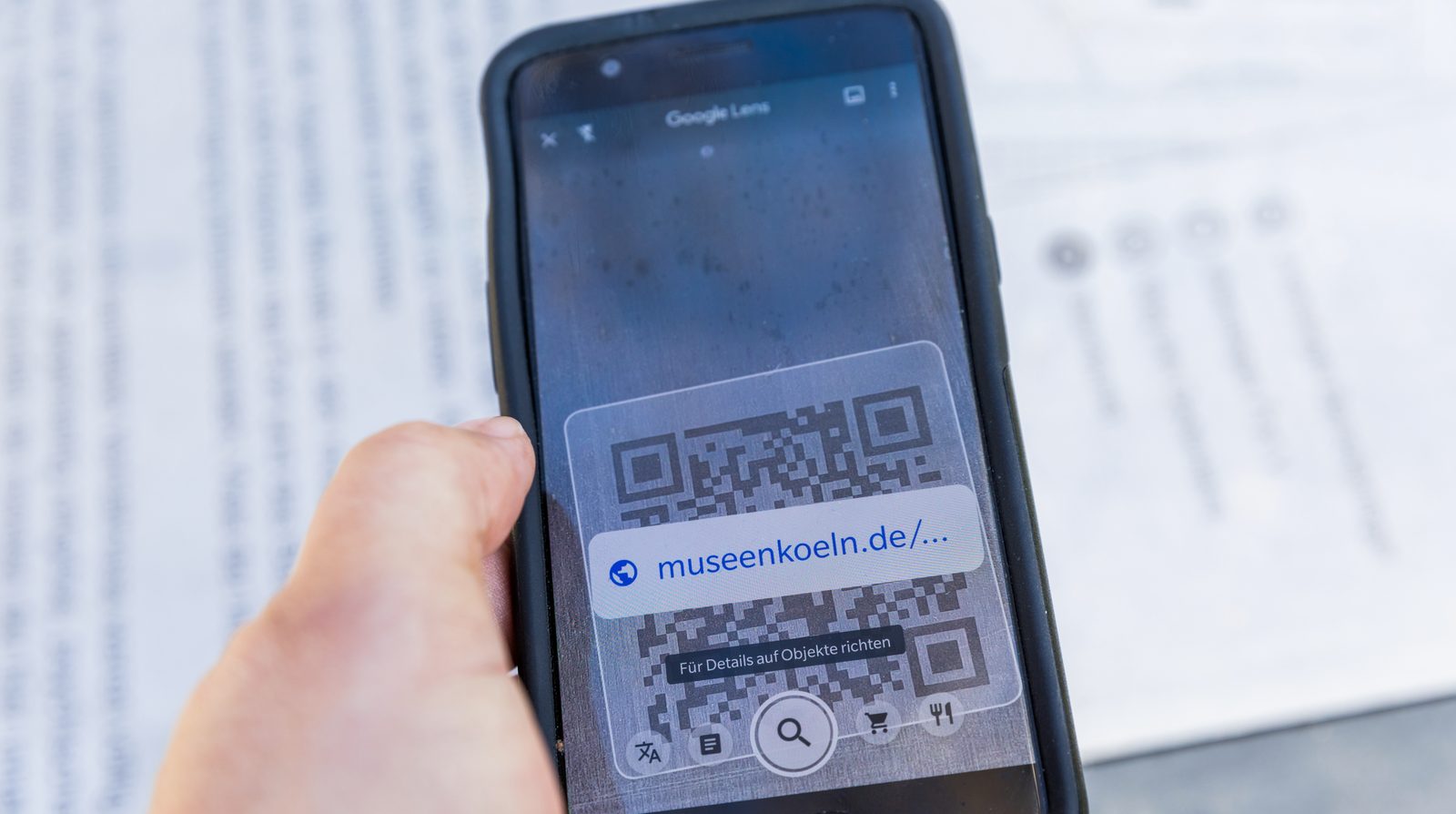
A customer scanning a QR code at a store touchpoint. Photo: Raimond Spekking, Wikimedia Commons, CC BY-SA 4.0.
Which 7 QR touchpoints are worth deploying?
- 1. Payment QR (VietQR) - the mandatory touchpoint. Customers now assume every shop has one; missing it costs experience points instantly.
- 2. Google Maps review QR - at the counter, with a staff invitation timed to a happy moment. Every review is a local-SEO vote that brings new customers for free.
- 3. Zalo OA / AI Agent QR - the channel that keeps the connection after the customer leaves. Strongest when the code leads to an AI agent that answers on the spot - opening hours, bookings, offers - instead of a page with just a follow button.
- 4. Menu / catalogue QR - cuts printing costs, updates prices instantly. Keep a printed copy for older guests; the QR is an extra option, not a full replacement.
- 5. Wifi-for-data QR - scan to get the wifi password in exchange for a phone number or an OA follow. The cleanest first-party data collection a store can run.
- 6. Loyalty QR - next-visit offers - the reason to return sits right on the receipt: scan for a voucher for the next visit, replacing easily lost paper cards.
- 7. Product-story QR - on packaging or display shelves, leading to origin videos, usage guides, the brand story. An advanced touchpoint for brands that want to stand out, like the models we analyze in retail space design in the AI era.

A QR touchpoint works when it appears exactly where the shopper needs more information or a next action. Illustration generated with AI.
How do you roll it out properly? 4 steps
- Pick the first 3 codes: payment, Google reviews, Zalo OA/AI Agent. Do not paste all 7 at once - one spot, one code, one message.
- Give customers a reason to scan: "Scan for a discount on your next visit", "Scan to give feedback - get 10% off your next bill". A code without a benefit is a code that gets ignored.
- Attach measurement: give each code its own UTM link (e.g.
?utm_source=qr-table) or a short link with stats, so scans show up in Google Analytics. - Check regularly: test-scan every code monthly - dead links, stale menus and wrong prices are "QR litter" that destroys trust faster than having no code.
The most common mistake we meet in audits: a QR code pointing at the generic homepage. A customer at table 5 wants to order more, scans the code, and lands on the company intro page - the experience breaks at the very first touchpoint. Golden rule: wherever the code sits, the destination must serve that exact context.
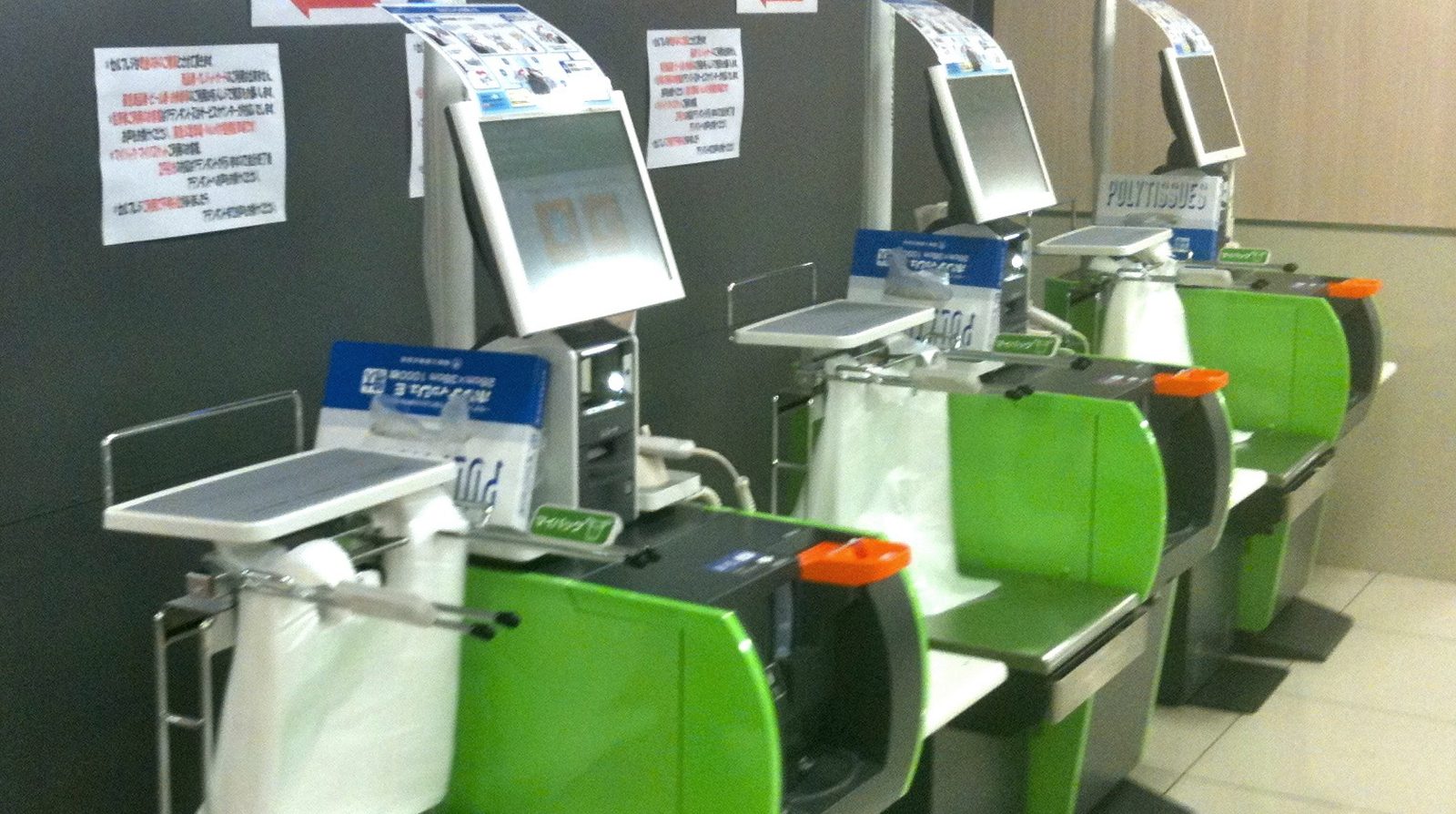
Self-service kiosks add digital touchpoints in-store. Photo: CoCreatr, Wikimedia Commons, CC BY-SA 2.0.
From touchpoints to personalization: the bigger picture
The real value of digital touchpoints is not each scan, but the accumulated data: who visits when, what they order, how they respond. Connect that data to an AI agent and a small store can do what only big chains used to: recognize regulars, suggest the right item, send the right offer at the right time - we describe the mechanics in phygital + AI personalization for every customer. Retail research across Southeast Asia keeps finding the same thing: customers do not yet trust AI to "sell" to them, but they love it when AI quietly smooths the experience - QR is exactly that quiet way.
If you want to start, Chạm AI's phygital service designs the full touchpoint set for a store - code placement, the invitation to scan, the AI agent behind it, and a weekly measurement board.
Data sources: NAPAS press briefing, late 2025, via Báo Chính phủ ("QR payments boom and the demand for full standardization", 11/2025) and VnEconomy ("QR payments in Vietnam: the shift from P2P to P2M"). Figures as of 10/2025.
Frequently asked questions
Which QR code should a small store start with?
Start with 3 codes in order: VietQR payment (customers expect it), a Google Maps review QR at the counter (each review is a local-SEO vote), and a Zalo OA or AI Agent QR to keep the connection after the customer leaves. All 3 cost close to zero and are instantly measurable.
How do I know whether in-store QR codes work?
Attach measurement to every code: a short link with stats or a UTM parameter (e.g. ?utm_source=qr-counter) so scans appear in Google Analytics. Set simple targets: scans per bill, new reviews per week, Zalo messages after scanning. If you cannot measure it, the code is decoration.
Are QR codes still relevant now that AI is here?
Yes - QR is the cheapest bridge between physical space and AI. A customer scans at the table to reach an AI agent for advice, ordering or product info: a complete phygital experience with no custom app. In Vietnam, VietQR volume still grew 52% in the first 10 months of 2025, showing the scanning habit keeps strengthening.