Outdoor stages in rainy season: electrical and wind safety

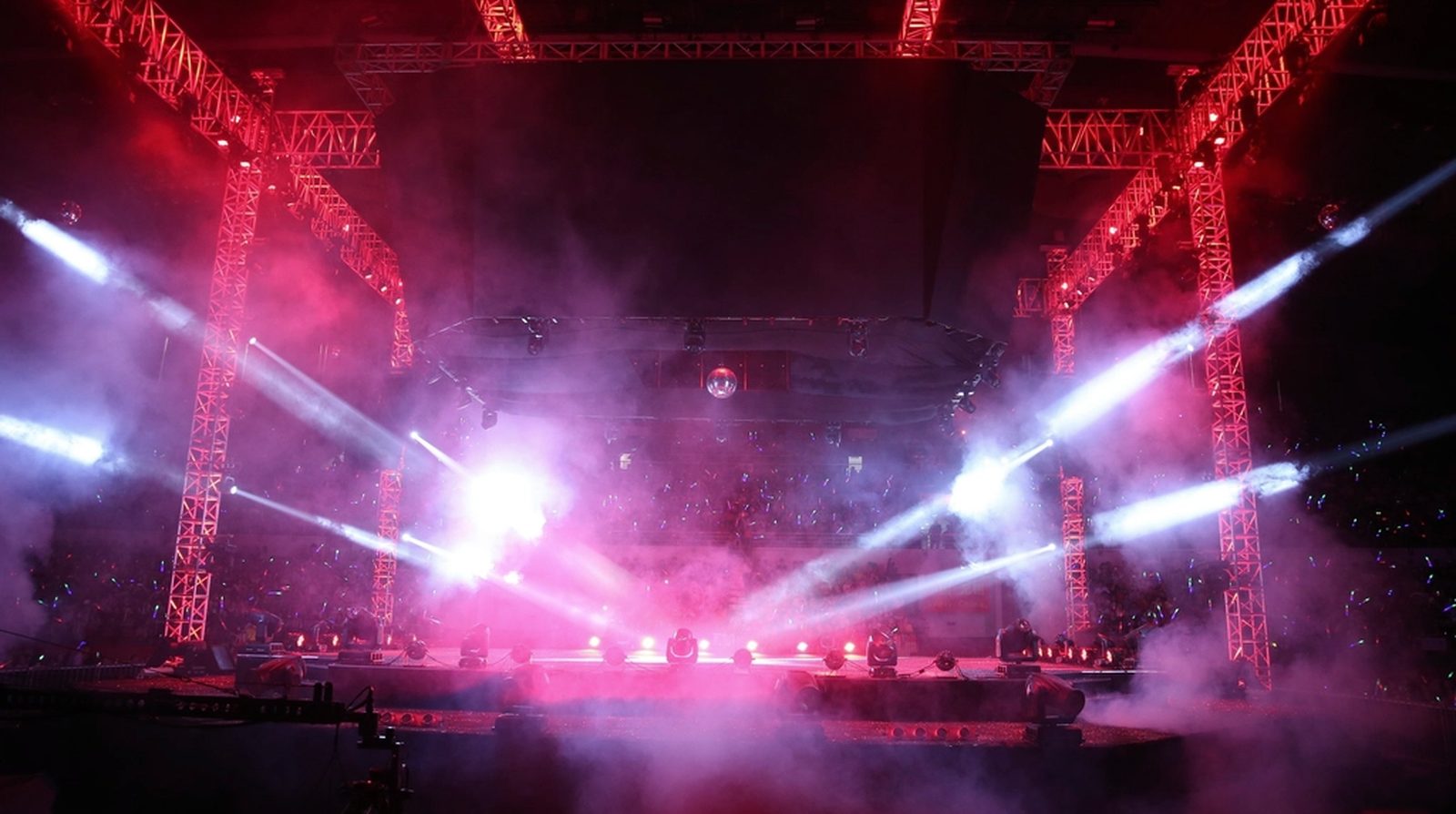
Truss frame and hanging lights - every load and wind-catching surface must be calculated beforehand. Stock photo (CC0).
An outdoor stage set up for a shop opening event gets caught in a sudden downpour mid-show. The speakers and lights are still plugged in, and a large backdrop stretched taut catches the wind like a sail. This scenario combines the two most dangerous risks of any outdoor event: electric shock and wind-driven structural collapse. Both are preventable with the right checks before setup, not once the rain has already started.
Outdoor stages during rainy season face two risks at once: electric shock from water reaching equipment, and structural collapse from sudden gusts of wind. Electrical safety requires a residual current device (RCD/ELCB) that trips at 30mA and IP65-rated (or higher) waterproof equipment for outdoor use. Structural safety requires knowing the wind level at which a temporary stage can no longer hold - Beaufort Force 6 (roughly 40-50 km/h) is a practical alarm threshold - and the backdrop must come down or the show must stop. Both need checking before setup, not once it is already raining.
Why are outdoor stages more dangerous in rainy season than indoor venues?
Indoors, electrical equipment and suspended structures rarely face direct rain or gusting wind. Outdoors, these two factors compound each other: rainwater increases the risk of electrical leakage through connectors, outlets, and cables laid on damp ground, while backdrops, large tarps, and lighting truss frames become large wind-catching surfaces - especially dangerous because rain is often accompanied by sudden gusts rather than steady wind. The combination of a slippery wet ground, cables trailing across the surface, and attendees standing close to the stage multiplies accident risk many times over compared to an indoor, covered event.

Cables on the stage floor are the most common leakage point once rain starts. Stock photo (CC0).
What electrical safety checks does an outdoor stage need?
Three things are mandatory before plugging in any equipment outdoors:
1. A residual current device (RCD/ELCB) must be installed at the main power feed for the stage area, automatically cutting power when it detects a leakage current of 30 milliamps (mA) or more - a widely recognized international threshold for areas with water exposure risk, fast enough to trip before a leakage current becomes life-threatening. Without this device, a small exposed wire under wet ground can turn the whole area around the stage into a hazard invisible to the naked eye.
2. Equipment rated IP65 or higher for water resistance for every outdoor outlet, junction box, and stage light - the higher the IP (Ingress Protection) rating, the better the dust and water protection; IP65 means fully dust-tight and able to withstand pressurized water jets from any direction, enough for ordinary rain but not the same as being submersible.
3. All cables laid on the ground must be raised out of any puddle or routed through protective conduit, never left bare in contact with damp ground or in a spot where attendees might step on an exposed section.
At what wind level should a temporary stage stop the show?
There is no single fixed wind-load number that applies to every stage, because wind resistance depends on the frame design, how it is anchored, and the wind-catching surface area (especially large backdrops and tarps) - this is a calculation specific to each temporary structure, determined by the event's engineer rather than a general rule. But the Beaufort wind scale - an international meteorological classification system - offers a practical reference point: Force 6 (roughly 40-50 km/h) is already enough to visibly shake large objects, with medium-sized tree branches swaying noticeably, a threshold many event organizers treat as a warning sign to consider reducing wind-catching surface area (rolling up part of the backdrop, lowering standing banners) or pausing if the wind keeps building. The safety rule of thumb: any temporary frame visibly shaking to the naked eye is a sign to stop immediately, without waiting for a calculation to finish. Load principles for frames carrying heavy equipment are covered in our LED screen rigging guide.
What should you do with large backdrops and tarps before strong winds arrive?
A taut, flat backdrop is the most dangerous wind-catching surface on a temporary stage because of its large area; wind acts as a continuous pushing force on the entire frame. Three practical ways to reduce the risk: cut a few small wind-relief slits in large tarps (especially ones used outdoors for multiple days) so wind passes through instead of loading the whole frame; add diagonal guy lines at all four corners rather than vertical anchoring alone; and have a plan ready to roll up the backdrop within minutes if wind picks up suddenly - never design a fixed, non-removable backdrop for a multi-day outdoor event.

An outdoor event needs one person with a single job: watching the sky and the wind. Photo: Nick Le (CC0).
Who is responsible for safety checks before an event begins?
For small events (a shop opening, a product launch), many business owners set up temporary stages themselves without a structural engineer, which means no one is clearly responsible if something goes wrong. For medium-scale stages or multi-day builds, someone with structural expertise should inspect the frame and anchoring plan before setup, and one person should be explicitly assigned to watch the weather with the authority to stop the show immediately when needed - agreed with the organizers in advance, not debated when the wind is already howling.
A common mistake is assigning "weather watch" to someone already busy running the show - the MC, the sound engineer, and the event manager all have their hands full and cannot keep glancing at the sky and checking hourly forecasts. Assign one person whose only job is this - a security guard or support staff member works - holding a phone or radio with a direct line to whoever has the authority to stop the show.
What is a quick checklist before an outdoor stage goes live?
Before showtime, run through five points: has the RCD/ELCB been installed and tested with its built-in test button; are all outdoor outlets and junction boxes rated IP65 or higher; have ground cables been raised out of puddles or routed through conduit; have all backdrop and tarp anchors been checked, with a quick roll-up plan ready; and finally, has one person been clearly assigned to weather watch with a direct line to the stage operator. These five minutes of checking cost far less than handling an incident mid-show. For full event-day preparation, see our corporate event checklist, and for sound and lighting line items, the sound and lighting rental price guide.
Frequently asked questions
How is an RCD different from a regular circuit breaker?
A circuit breaker (CB) only trips on overload or short circuit; it cannot detect the small leakage currents that pass through a human body. An RCD/ELCB specializes in detecting leakage and trips at around 30mA, fast enough to protect life before a leakage current becomes dangerous - especially important in wet areas like an outdoor stage in rainy season.
What does an IP65 rating on electrical equipment mean?
IP (Ingress Protection) is the international rating system for how well equipment resists dust and water. IP65 means fully dust-tight (the 6) and able to withstand pressurized water jets from any direction (the 5), suitable for outdoor electrical equipment in ordinary rain, but it does not mean the device can survive being submerged.
At what wind force should an outdoor event be stopped?
There is no fixed level for every stage because it depends on the frame design and wind-catching surface area; the engineer in charge needs to determine it specifically. As a reference on the Beaufort scale, Force 6 (roughly 40-50 km/h) is the threshold many event organizers treat as an alarm to consider lowering the backdrop or stopping the show.
Does a small event like a shop opening need a structural engineer to check the stage?
For a small, simple temporary stage it is not mandatory, but someone with basic knowledge of anchoring and electrical safety should still check before setup. For medium-scale stages or multi-day outdoor builds, someone with structural expertise should inspect it, to avoid the risk of no one being clearly responsible if something goes wrong.