In-store digital signage: what to show, where to place it so it pays


Plenty of Vietnamese shops have already bought a screen: a TV mounted behind the counter, a music playlist or a football match on loop, unchanged for a year. The screen becomes a ten-million-dong decoration. Yet the same device, in the right spot with the right content, is the hardest-working salesperson in the store: it never takes a day off, never forgets a promotion, and says exactly what customers need to hear at exactly the right daypart.
Digital signage (in-store content screens) achieves an 83% recall rate, helps retailers lift sales by up to 32%, and raises impulse purchases by 29.5% when placed near checkout. Three placements that pay: the street-facing window, the checkout counter and the waiting area; avoid mounting too high, hiding screens behind columns, or putting a consumer TV in direct sunlight. Four content groups that sell: daypart menus, happy-hour offers, social proof and short how-to guides; skip long corporate videos and text-heavy slides. Starting costs: a consumer TV plus media box at roughly 9-17 million VND, commercial displays at 15-40 million VND, software from 0 to 300,000 VND per screen per month. Measure with a screen-only QR code and a screen-only promo code - strongest when the QR leads straight into an AI agent.
Does an in-store screen actually make money?
The international numbers answer firmly. Arbitron's classic study of point-of-sale video recorded a content recall rate of 83% - far above print advertising, which only about 44% of viewers remember after a week. The 2025 digital signage statistics roundups show retailers using screens well lift sales by up to 32% on average, impulse purchases jump 29.5% when screens sit near checkout areas and end-caps, and 19% of shoppers admit buying something unplanned after seeing a digital sign. It is no accident that the global digital signage market reached 31.1 billion USD in 2025 and is forecast by Grand View Research to hit 58.4 billion USD by 2033.
One distinction matters: this article covers fixed screens inside a store - TVs, commercial displays and menu boards running year round. Large LED walls rented by the day for stages and conferences are a different problem in both price and engineering; see our guide to LED screen rental prices in Ho Chi Minh City.
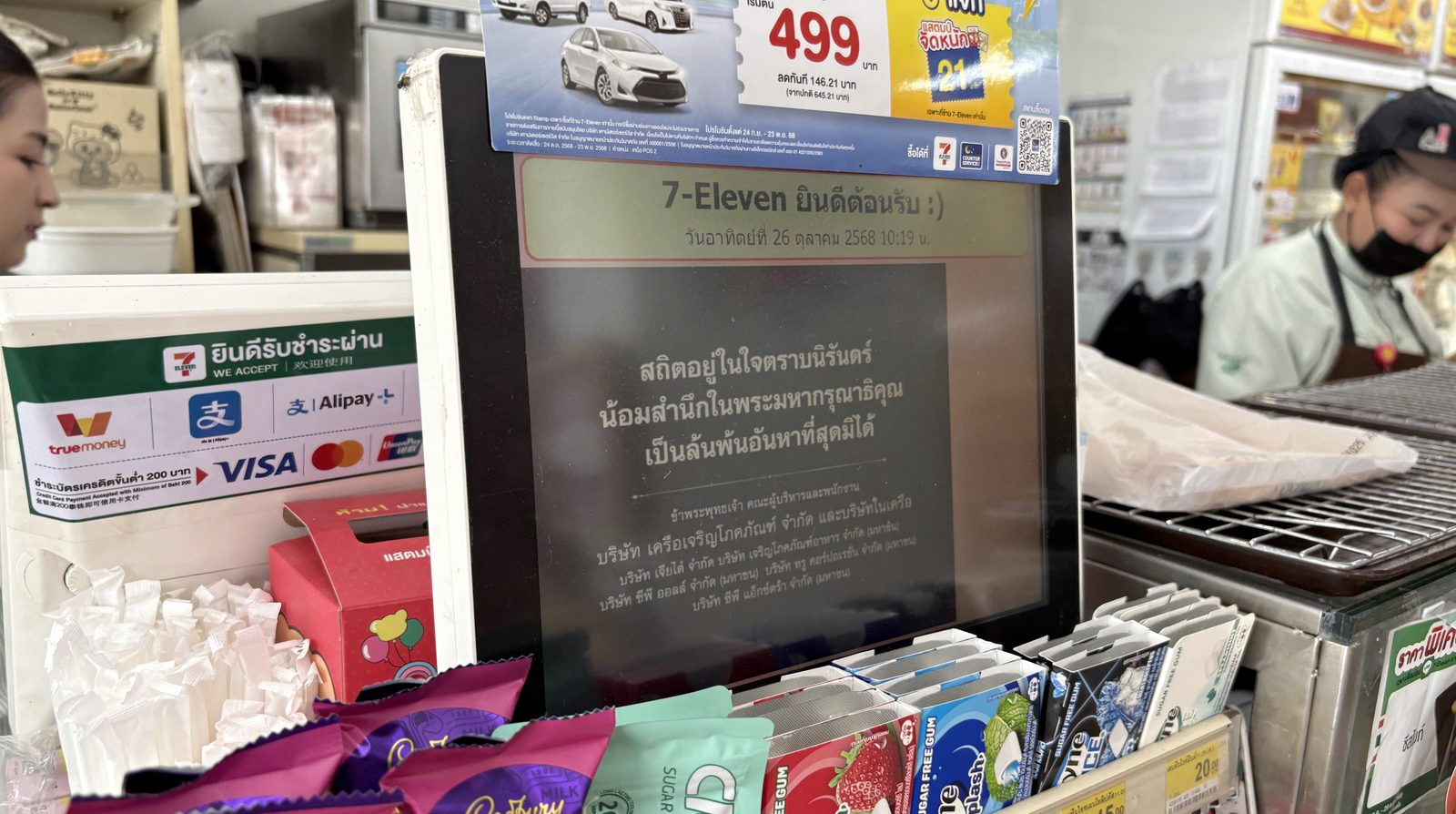
A dedicated visual selected for this article. Photo: Chainwit., BY license.
Where should screens go - and where should they never go?
The three placements most worth the money, in priority order:
- 1. The street-facing window - the only screen that reaches people who have NOT entered yet. A display facing the pavement running best-sellers and today's offer is a living signboard, replacing the standee you reprint every week. Note: this spot usually catches sunlight, so it needs a high-brightness display (from 1,500 nits); a regular TV turns into a glossy black mirror.
- 2. The checkout counter - where customers stand still for 30-90 seconds with their wallet in hand. This is where the 29.5% impulse-purchase lift comes from: suggest toppings, combos, gift cards, takeaway items. A 32-43 inch screen at eye level is enough.
- 3. Waiting and fitting areas - retail studies record that engaging screen content cuts perceived wait time by up to 35%. Customers waiting for a drink or a fitting room are a willingly captive audience: show the brand story, care instructions, the membership program.
And four spots to avoid: mounted above eye level (over 2.2 m forces customers to crane; only menu boards behind the counter belong there); hidden corners behind columns or tall shelves - a screen nobody sees is wasted electricity; direct sunlight if all you have is a consumer TV; and right at the exit, where customers already have their back turned. The screen also has to fit the store's overall lighting: an over-bright panel in a warm space kills the mood, a topic we covered in depth in store lighting and atmosphere.
What content sells - and what content burns money?
The ground rule: a passing customer looks at a screen for 3-5 seconds, so each slide carries one message, big type, big numbers. Four content groups with a proven payback:
- A daypart menu - push coffee and pastries in the morning, lunch combos at noon, fruit tea in the late afternoon. Update prices and sold-out items in 30 seconds instead of reprinting the menu.
- Happy-hour offers - "2-4pm: 20% off peach tea" with a countdown timer creates urgency and pulls revenue into the hours that are usually empty.
- Social proof - the latest 5-star Google Maps reviews, customer check-in photos, real numbers like "1,280 cups sold this week". Praise from past customers persuades better than any slogan.
- Short how-to guides - how to order, how to earn points, how to scan the QR to book a table. The screen answers the questions your staff repeat 50 times a day.
By contrast, three content types almost guarantee wasted money: 3-5 minute corporate intro videos (nobody stands through them); default news or music channels (entertainment for the staff, sells nothing); and slides packed with small text like a scanned flyer. On refresh rhythm: rotate playlists by daypart, refresh offers weekly, and review the full loop monthly - content left unchanged for 6 months turns invisible to regulars, exactly like the wall behind it.
How much does it cost?
- Consumer TV, 43-55 inch: 8-15 million VND. Fine for indoor, shaded spots running under 12 hours a day. Risks: warranties usually exclude business use, and static menus can burn in.
- Commercial display, 43-55 inch: 15-40 million VND. Runs 16-24/7 at 450-700 nits with a warranty valid for commercial use. Sunlit windows need high-brightness units from 1,500 nits: 30-60 million VND.
- Media player (Android box): 1-2 million VND per screen if the display has no built-in OS.
- Content management software (CMS): free tiers cover 1-2 screens; paid plans at 100,000-300,000 VND per screen per month add daypart scheduling and remote multi-branch control.
In other words, a coffee shop can start seriously with about 10-17 million VND for its first counter screen - less than one month of a full-time salary, and a line item worth planning from day one when designing the shop's touchpoints, as we describe in phygital for coffee shops.
How do you measure it - and connect it to an AI agent?
A screen you cannot measure is just a signboard. Three cheap, reliable measurements:
- A dedicated QR per screen - each screen gets its own code with its own UTM tag (e.g.
?utm_source=screen-counter) to count scans in Google Analytics, separate from the codes on tables or receipts - the same system we map out in QR codes in your store. - A screen-only offer - "say the code SCREEN10 at the counter for 10% off". Every redemption is proof of a real viewer.
- Before-after sales for featured items - pick 1-2 items, feature them heavily for 2 weeks, compare with the 2 weeks before. If nothing moves, change the content, not the screen.
The final step turns the screen from a loudspeaker into a closer: point the on-screen QR straight into the store's AI agent. A customer sees the offer on the screen, scans, and lands in a chat to book a table, claim the deal or ask about an item - no app install, no waiting for a free staff member. The screen wins attention in 3 seconds, the AI agent handles the rest of the conversation, and every chat is a measurable conversion. If you want the full setup, Chạm AI's phygital service designs everything from screen placement and daypart content scripts to the AI agent behind the QR code.

A dedicated visual selected for this article. A dedicated editorial visual selected for this article.
Data sources: Arbitron Digital Place-Based Video Study (83% recall rate, cited in the 2025 digital signage statistics roundups by Crown TV and AIScreen); 32% sales lift, 29.5% impulse-purchase lift and 19% unplanned purchases per the Digital Signage Statistics 2025 roundups (Wallboard, Mvix, Electro IQ); 35% lower perceived wait time per retail studies cited by Digital Signage Today and Screenfluence; market size of 31.1 billion USD (2025) and 58.4 billion USD forecast (2033) per Grand View Research.
Frequently asked questions
Should a store use a consumer TV or a commercial display?
A 43-55 inch consumer TV at 8-15 million VND is fine for indoor, shaded spots running under 12 hours a day - a good way to test. A commercial display at 15-40 million VND runs 16-24 hours a day, delivers 450-700 nits and carries a warranty valid for business use. A sunlit window needs a high-brightness unit from 1,500 nits at 30-60 million VND - a regular TV there turns into a glossy black mirror and fails early.
What content should an in-store screen show?
Four content groups that sell: a dynamic menu that changes by daypart, happy-hour offers with a countdown, social proof (fresh 5-star reviews, real sales numbers) and short how-to guides. Every slide follows the 3-second rule: one message, big type, readable in 3-5 seconds. Avoid long corporate videos, default news channels and text-heavy slides - that content burns money.
How do I measure whether an in-store screen makes money?
Use three measurements: a dedicated QR code per screen with its own UTM tag (e.g. ?utm_source=screen-counter) to count scans in Google Analytics; a promo code that only appears on the screen, so every redemption proves a real viewer; and a before-after comparison of sales for featured items over 2 weeks. The strongest setup routes the QR into an AI agent: every chat is a measurable conversion from the screen.