Rebranding checklist for SMEs: 12 steps to a new brand without losing old customers

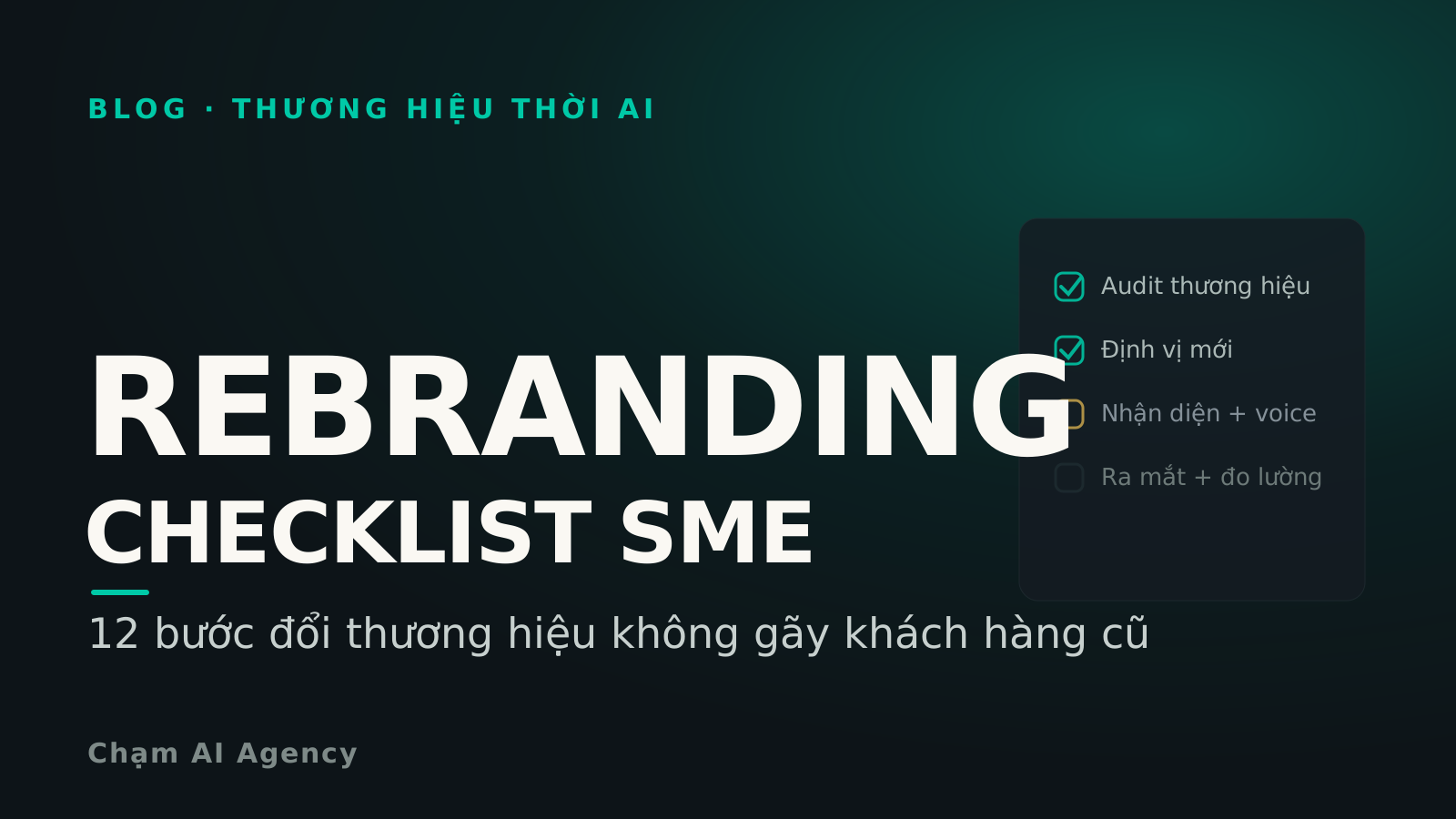
This blog has dissected over a dozen rebrands - from Vinamilk, Viettel and Highlands succeeding to Gap, Tropicana and Jaguar paying dearly. This article distills all those lessons into a 12-step checklist a Vietnamese small business can use right away, plus the part most other checklists miss: preparing the new brand for the AI era.
Rebranding is only worth it for a strategic reason: positioning drift, market expansion, a merger, or escaping a crisis - not because you are bored of the logo. The safe process has 12 steps in 4 phases: Diagnosis (audit, customer research, deciding the degree of change), Strategy (positioning, brand architecture, brand voice), Creation (identity, testing with loyal customers, legal protection) and Launch (internal first, phased transition, updating your AI presence, 6 months of measurement). Reference costs for Vietnamese SMEs: 30-400 million VND depending on scope, excluding signage and packaging replacement.
When should (and shouldn't) you rebrand?
A well-timed rebrand is a growth lever: Vinamilk changed its identity after 47 years to rejuvenate before its audience aged out, Viettel switched to tech red as it moved from telco to digital group, and Highlands softened its tone to feel closer. The common thread: all 3 changed because the business strategy changed, not for aesthetics. Rebranding for the wrong reason is the fastest way to burn money: Gap changed its logo in 2010 and reversed within 6 days, at an estimated cost of $100M; Tropicana changed its packaging and lost about 20% of sales in one month.
Quick rule: if the problem lies in the product, service or operations, a rebrand will not save you - customers do not come back for a new logo. Rebrand only when your answer to "who is our target customer 3 years from now, and what do they need to see in us?" differs sharply from the current image.
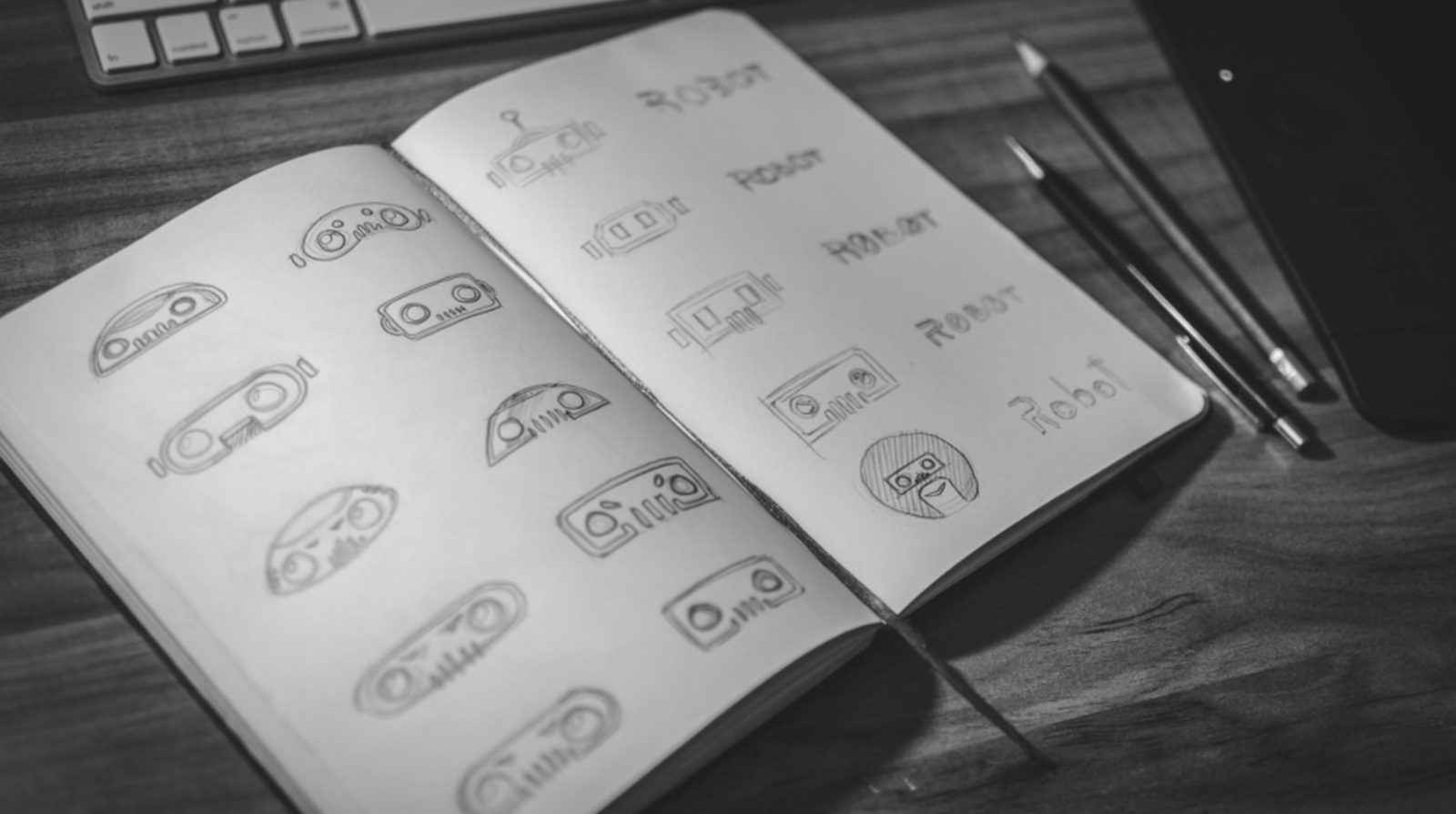
Logo option sketches in a notebook. Stock photo (CC0).
What are the 12 steps across 4 phases?
- Audit the current brand: what customers actually think (survey 20-30 real customers), which assets still hold value - name, colors, symbol, voice.
- Nail the strategic reason: write one sentence, "we are rebranding because...". If you cannot write it, stop the project.
- Choose the degree: a refresh (keep the name, adjust the identity) or a rebirth (change positioning, possibly the name). Most SMEs only need a refresh.
- New positioning: target customer, differentiation, promise - on 1 page. This is the root everything else maps back to.
- Brand architecture: how product lines and sub-brands rearrange under the new positioning.
- Brand voice: forms of address, vocabulary, attitude - documented for humans and for the AI agent that will speak for the brand.
- Identity design: logo, colors, type, real applications (signage, packaging, social, website). Keep the assets customers loved in step 1.
- Test before locking: put the options in front of loyal customers. Tropicana and Gap both skipped this step.
- Legal: search and register the new trademark before announcing - discovering a name clash after the switch is a double disaster.
- Launch internally first: staff must understand the why and tell the new story before customers ask. The reverse lesson from Duolingo's communications crisis: a message misaligned internally will blow up externally.
- Transition in phases: digital channels first (cheap, fast to fix), physical later; run old and new identities side by side for 1-3 months with an announcement that tells the reason.
- Update your AI presence + measure for 6 months: see the section below - the part traditional checklists miss.

An effective rebrand coordinates signage, packaging, uniforms and digital channels through a phased rollout. Illustration generated with AI.
What does it cost a Vietnamese SME?
Vietnamese market reference (varies by scope and provider): a basic package of logo, identity system and guidelines from a small studio typically runs 30-100 million VND; a full package with research, positioning strategy, brand voice and multi-channel rollout commonly sits at 100-400 million; famous agencies can charge many times more. The most-forgotten budget line is physical replacement: signage, packaging inventory, uniforms, printed materials - for a multi-location chain this can exceed the design fee itself. A working allocation: 20% diagnosis and strategy, 40% creation, 40% rollout and launch communications.
Before locking the budget, read 10 Vietnamese brands worth studying in 2026 to see which investments genuinely create separation at scale, and which ones a smaller company can safely postpone.

A designer building the visual identity on-screen. Stock photo (CC0).
Step 12 in detail: the new brand must be known to AI
This is what pre-2024 checklists lack: ever more customers ask ChatGPT or Gemini before buying, and the AI only knows your old brand. After a rebrand, update the machine-readable record: an Organization schema with the new name (plus alternateName for the old one so AI links the two entities), an updated llms.txt file, synchronized names and descriptions on Google Business and every social profile, and a clear "We changed our name" page for AI to cite. Then ask ChatGPT about your brand monthly to measure the update. The full strategic picture lives in the pillar article brand rebirth in the AI era.
Businesses that want a partner through the whole journey - from audit to launch and AI presence - can look at Chạm AI's brand rebirth service, or self-score the current website with the free SEO + GEO Audit tool before starting.
Case-study figures are drawn from the detailed analyses on this blog (Gap 2010, Tropicana 2009, Vinamilk 2023, Viettel 2021, Highlands 2023, Duolingo 2025) - each with its own sources. Costs are market references, not quotes.
Frequently asked questions
When should a small business rebrand?
Rebrand for a strategic reason: the old positioning no longer fits the target customer, expansion into a new industry or market, a merger, or a brand attached to a crisis. Do not rebrand out of boredom with the logo or to chase trends - changing the shell while keeping the problem inside is the most useless way to spend money.
How much does rebranding cost a Vietnamese SME?
Vietnamese reference levels: a basic package (logo, identity system, guidelines) around 30-100 million VND with a small studio; a full package with positioning strategy, brand voice and multi-channel rollout usually 100-400 million; large agencies can be far higher. Add the cost of replacing signage, packaging and printed materials - the line most often forgotten in budgets.
Will a rebrand lose existing customers?
The risk is real if you switch abruptly without explanation: Tropicana lost about 20% of sales within a month of its packaging change. To reduce risk: keep the identity assets customers love (colors, symbol, familiar name), announce in advance with the reason, transition in phases, and measure the reaction of loyal customers before rolling out everywhere.